


Asset Class Returns - 7/31/2026
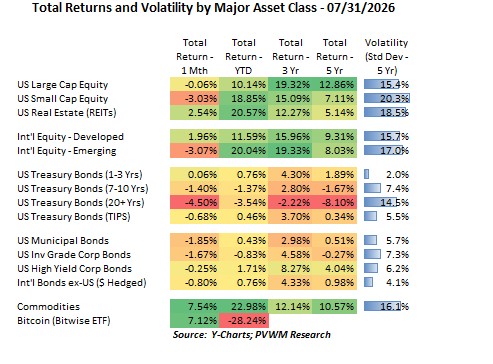
The equity market was mixed in July with riskier asset classes – US Small Caps and Int’l Emerging – underperforming US Large Caps and Int’l Developed markets. Interest rates moved a lot, for rates anyway. Here are some observations from the table above.
- YTD returns remain very solid for all equities, though variation within
- Even though US Small Caps and Emerging were down about -3% each, their YTD returns are still noticeably ahead of the safer counterparts – US Large Cap and Int’l Developed
- Rate rose quite a bit in July; the impact of duration – price sensitivity to a change in rates – can be seen looking down the different maturity of Treasury indices
- Yes, it is true the last five years’ annualized returns are negative for longer maturity treasury and investment grade bonds, though less so on the latter due to credit spreads
- Commodities reversed course with higher Energy prices as troubles in the Strait of Hormuz remain
- Bitcoin also had a solid month, up +7.1%, but has the worst YTD return; note however returns have been relatively flat since early February.
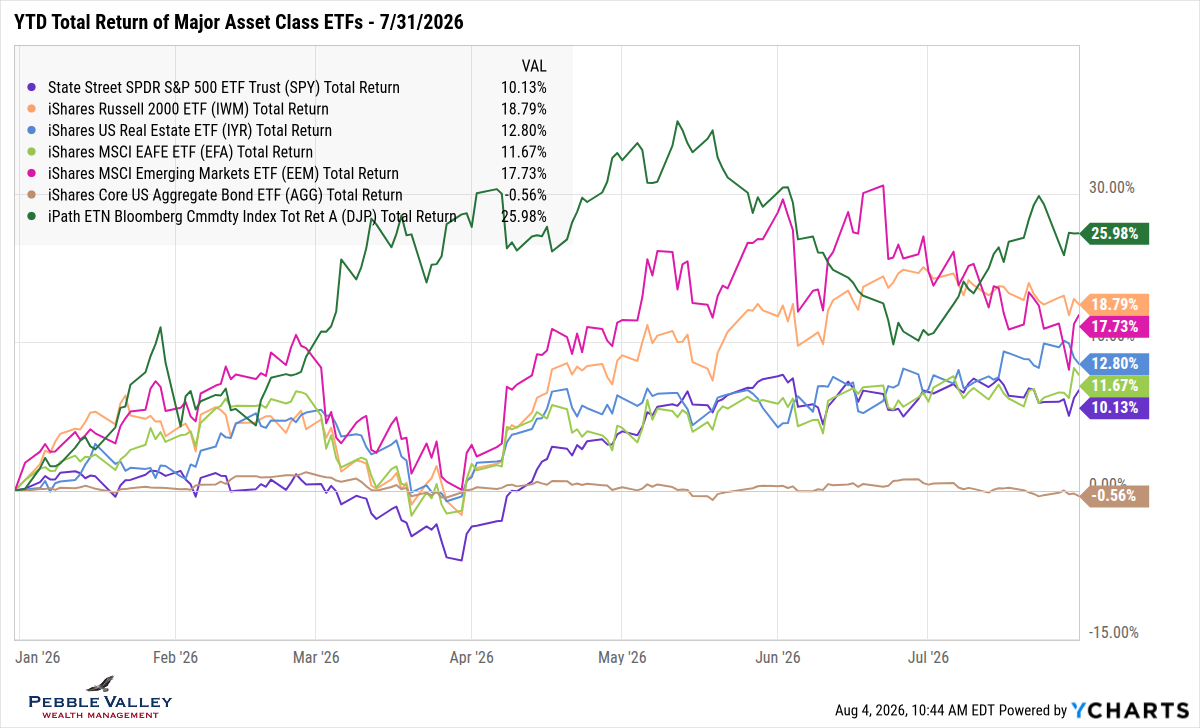
The graph below of total returns of major asset class ETFs captures the movements during the year. Commodities (dark green) continue their zig-zag pattern while Emerging Markets had a noticeable pullback before a strong recovery over the last couple days of July. The YTD bubbles in the 10+% range remain impressive.
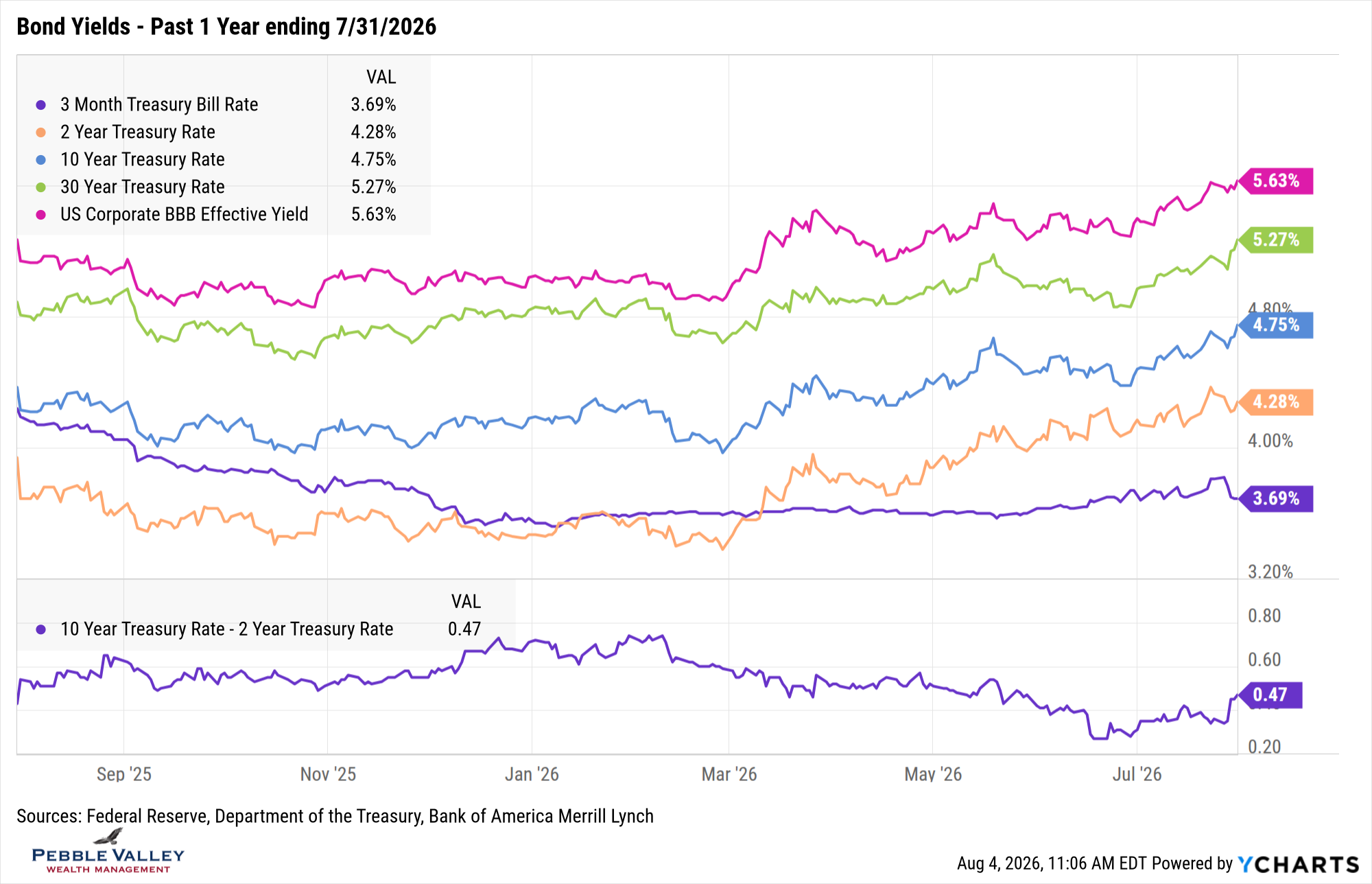
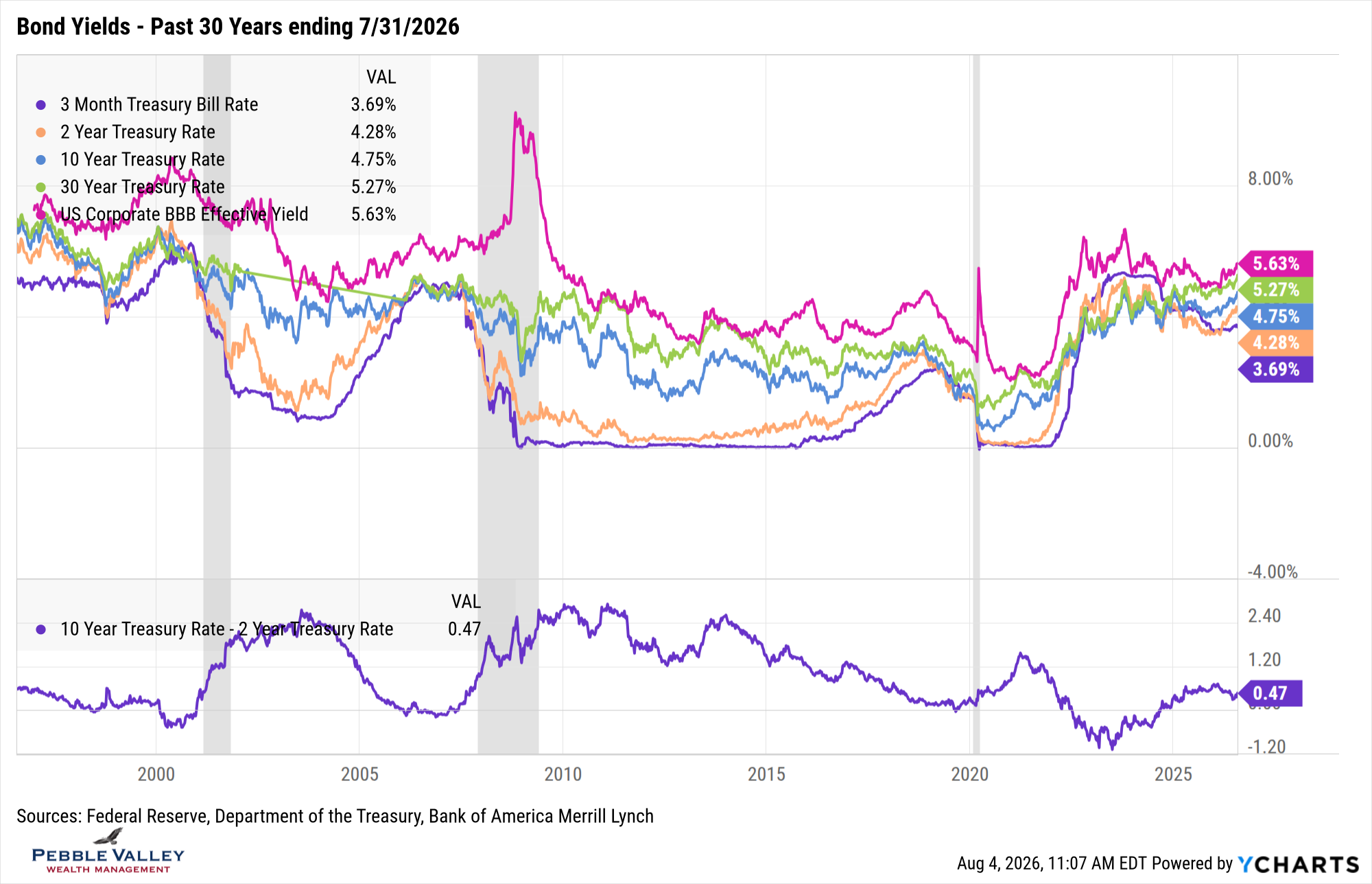
Next are the bond yield graphs over the past one- and thirty-year time frame. The main focus from my perspective is the march higher in rates, not only for the month of July, but the substantial move since the end of February as inflation concerns – and continued heavy debt load – remain on bond investors’ minds. Also take a look at the 30-year time frame and notice current levels on 30-yr bonds are back to 2007 highs.
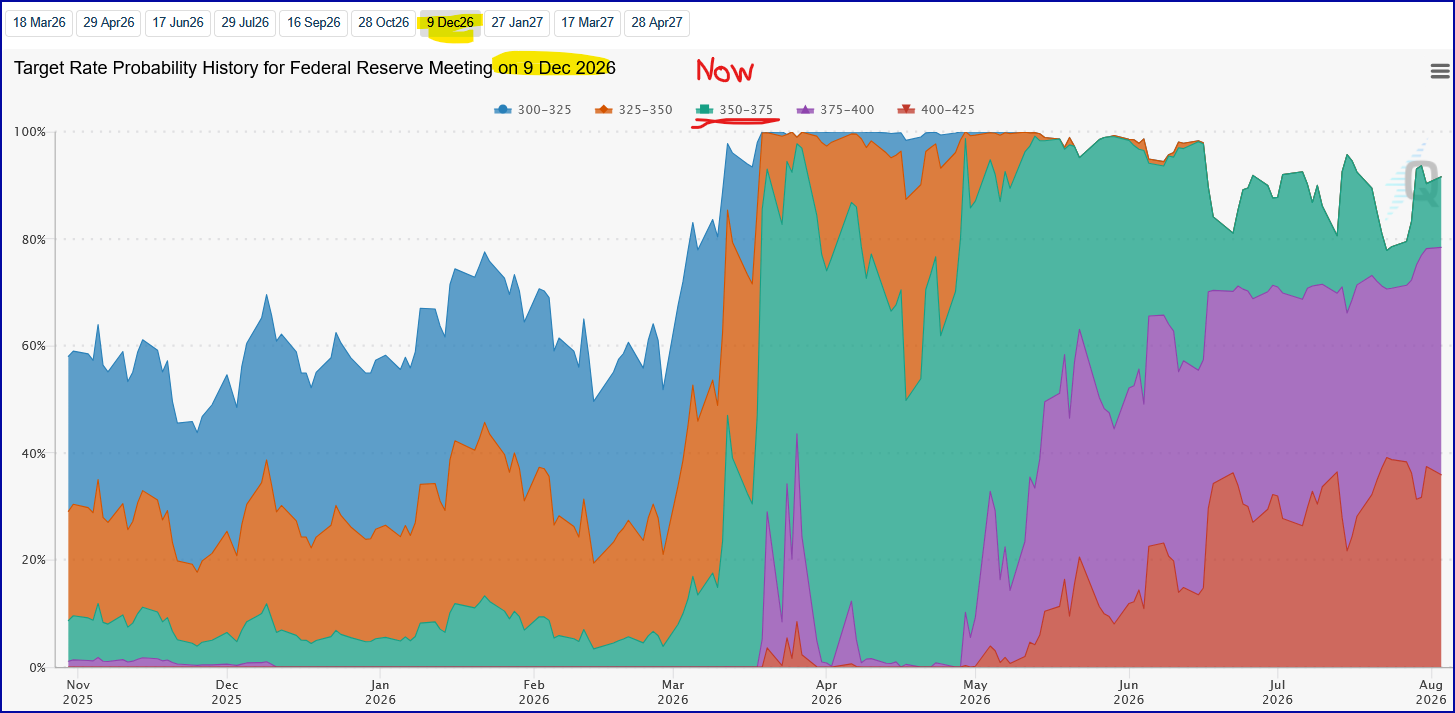
The second FOMC meeting with new Chair Kevin Warsh concluded July 29. The Fed kept Fed Funds rate steady at 3.50% - 3.75% but three voting members wanted a rate hike. Prior to the meeting the futures market was pricing in an implied 30+% potential hike. The Fed statement remained short and factual with no forward guidance provided. During the press conference, the Fed reiterated its 2.0% inflation target. When asked by reporters why the Fed didn’t hike rates, Chair Warsh reminded them that the market did, pointing to the higher rates across the curve since the June 17 meeting. There will be two inflation prints before the next Fed meeting at the end of September, along with the Jackson Hole Economic Symposium where Chair Warsh will speak. The Fed Funds futures market continues to price in at least one (purple band) and possibly two (red band) rate hikes before the end of the year as seen in the graph below (Source: CME FedWatch, Aug 4, 2026 am).
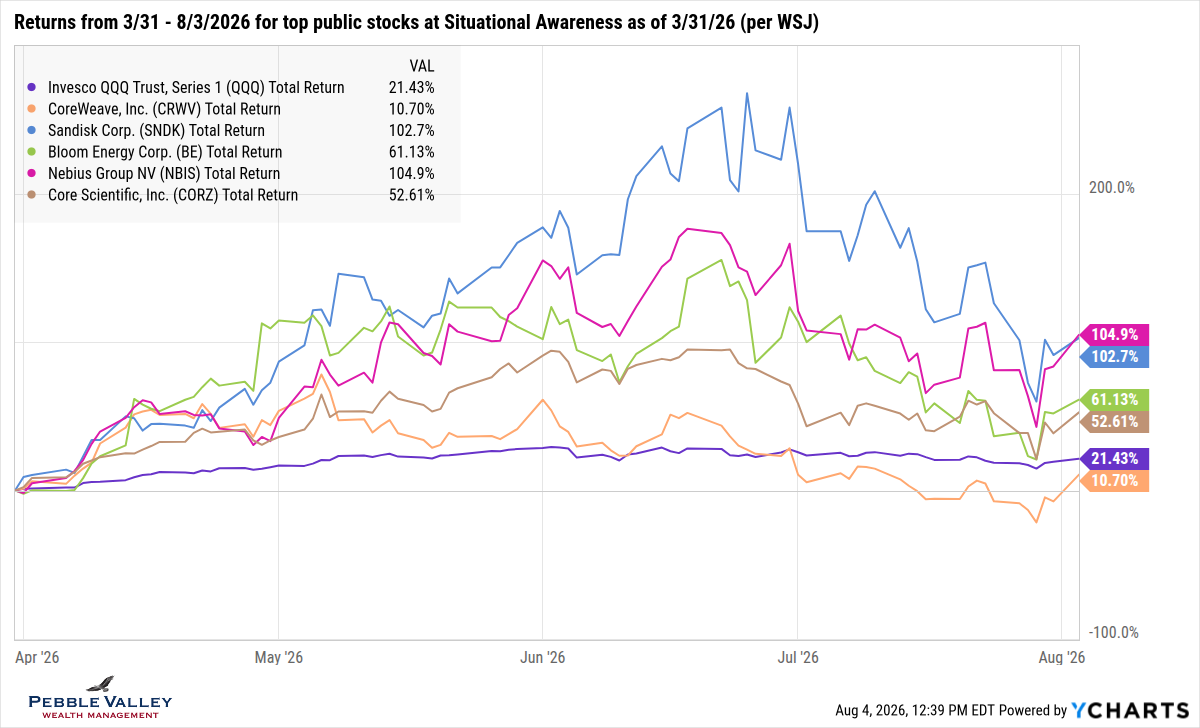
My special topic this month is a brief comment on the hedge fund Situational Awareness. The name came from a 165-page essay the founder published recently, “Situational Awareness: The Decade Ahead”, that focused on AI’s development. The situation that caused problems was the overuse of leverage. This helped amplify the returns on the way up, but with an even faster speed on the way down with forced selling and other market participants leaning on their positions. Citadel stepped in and bought the fund’s public positions at a discount which stopped the bleeding. While the selling pressure did not cascade over the broader market for very long, the impact of leverage was highlighted yet again to market participants who forgot (or never experienced) what borrowing funds to buy even more exposure with the same amount of capital can do on the way down.
Enjoy the last two months of summer – said the guy who is finished bringing kids back to school and can count September as well!
Have questions? Reach out! We're happy to help.
Posted by Kirk, a fee-only financial advisor who looks at your complete financial picture through the lens of a multi-disciplined, credentialed professional. www.pvwealthmgt.com